

Eucalypt Conversation Program
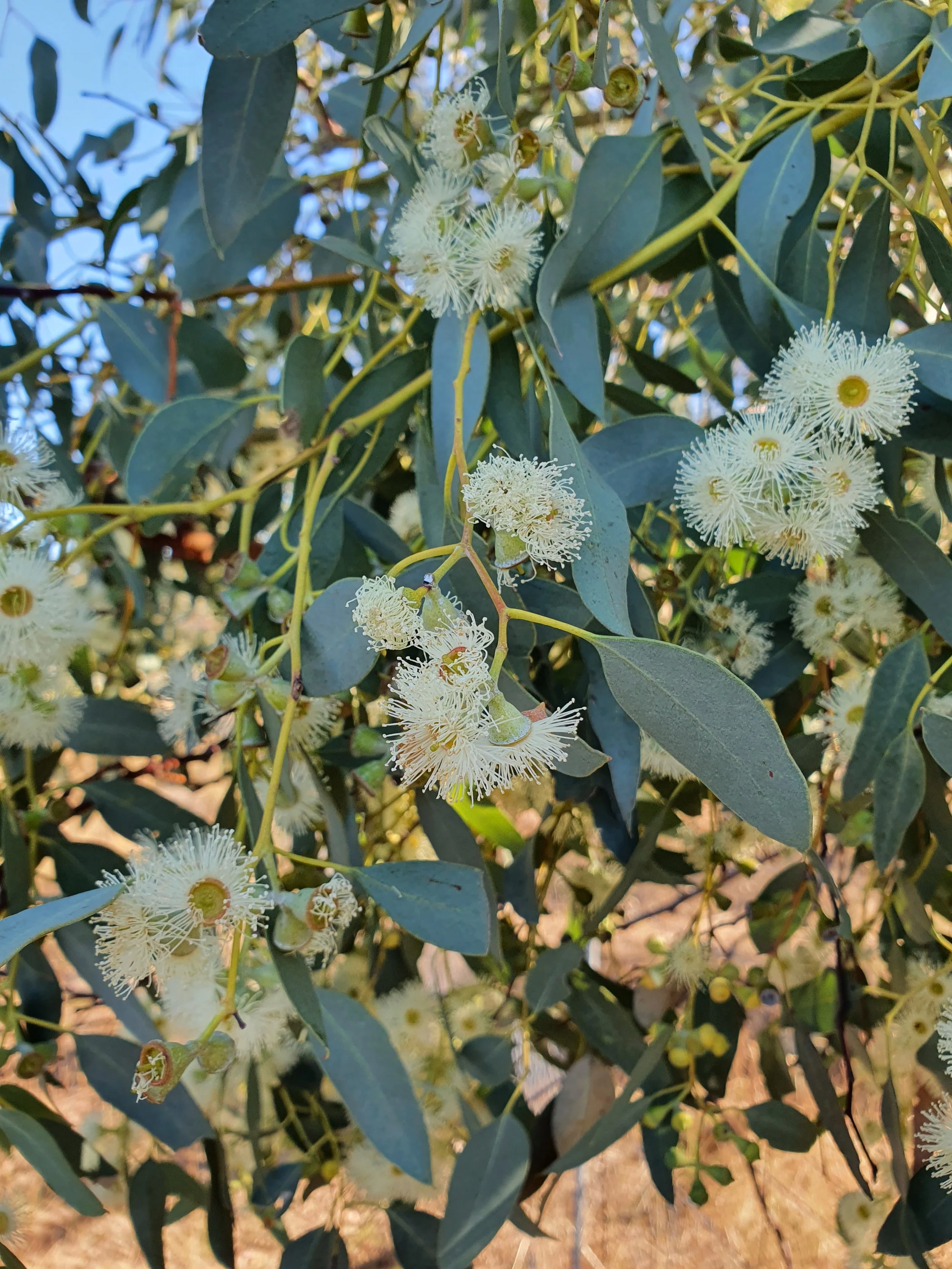
Morrisby’s Gum in flower.
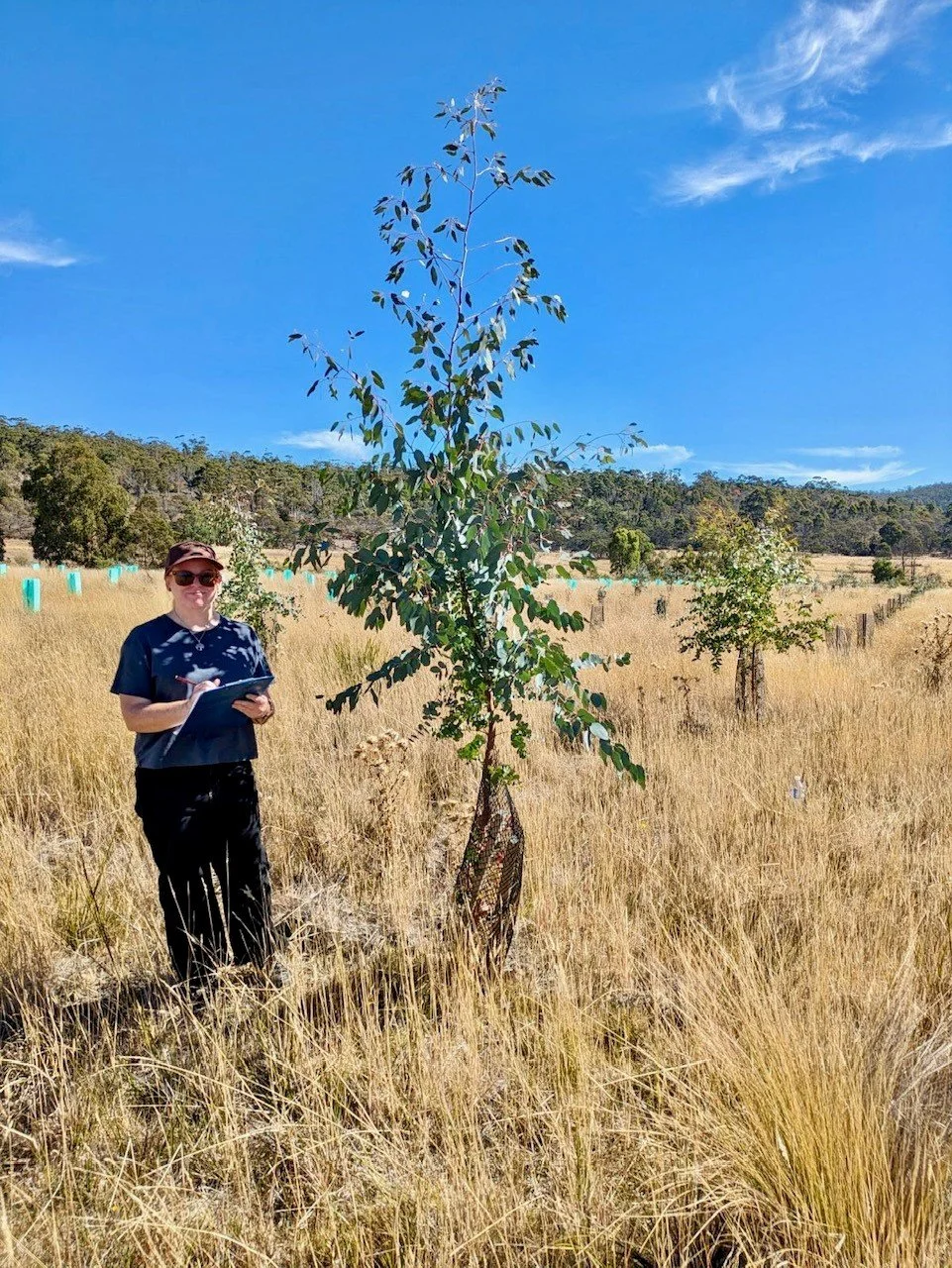
Researcher checking the growth rates of translocation planting on the east coast
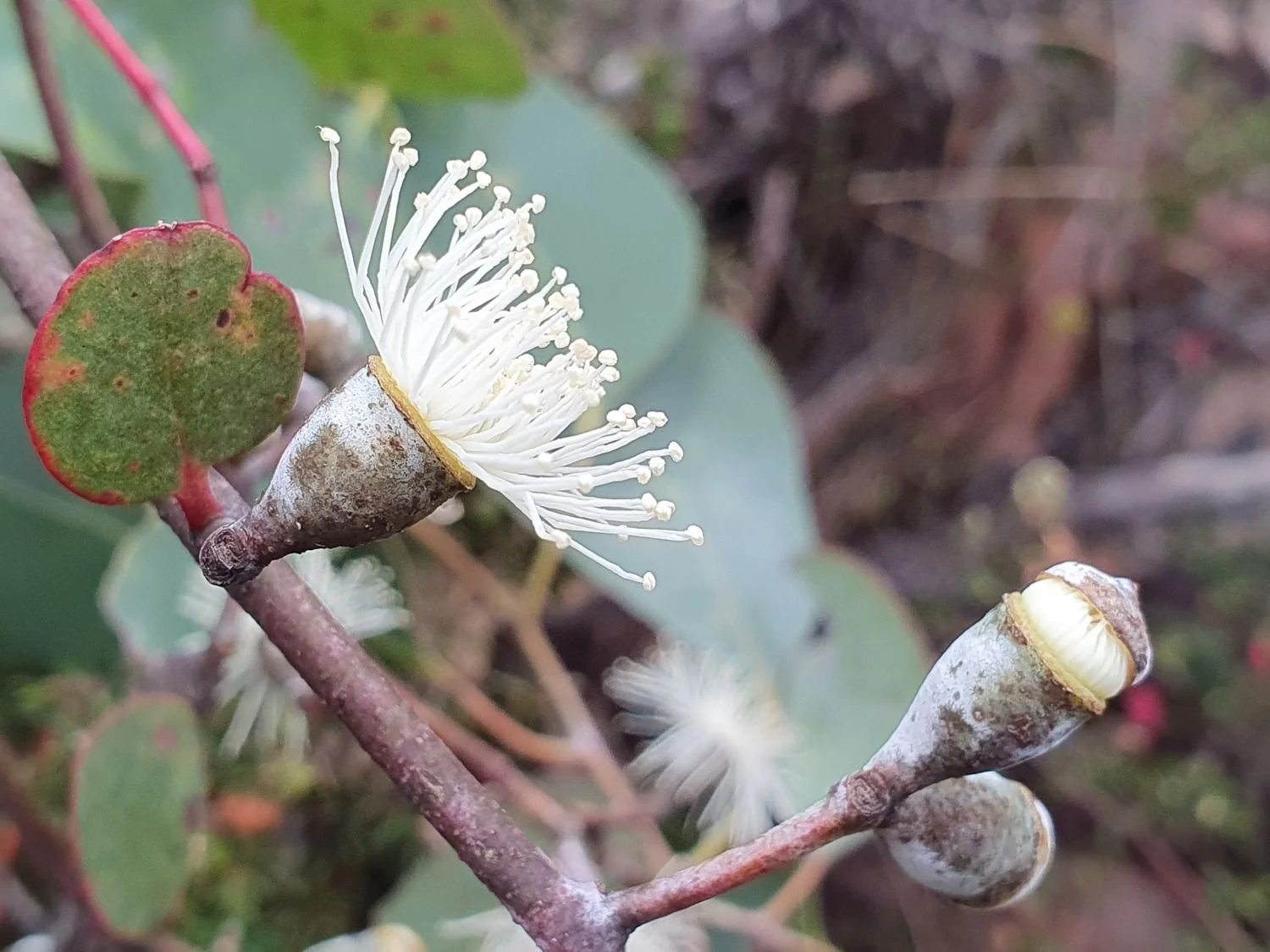
Morrisby’s Gum in flower.
Eucalypt conservation program
The Eucalypt conservation program aims to improve the conservation of Tasmanian eucalypt species, with a focus on improving the ex-situ conservation of eucalypts through adequate seed banking at the Tasmanian Seed Conservation Centre.
Early modelling work mapped priority seed sources for several Tasmanian alpine and lowland species. This helped identify populations that may hold particular importance for future restoration. Two of these, The Morrisby’s Gum and Mienna Cider Gum, formed the basis for the Eucalypt conservation program.
This program has improved our understanding of critical seed sources for climate ready restoration through the use of modelling under predicted changes in climate, and by incorporating outcomes of thermal germination experiments.
Our aim is to benefit eucalypt conservation through
Targeted seed banking,
Refined strategies to build resilience in revegetated populations,
Prioritise translocations within and outside a species range to ensure long-term survival of these foundational flora species.
We are working towards strengthening the broader strategic approach to conserving Tasmania’s eucalypt species into the future.
Focus on Morrisby’s Gum
The critically endangered, endemic Eucalyptus morrisbyi (Morrisby’s gum) and its recovery plan highlighted the need for improved seed banking of endemic Tasmanian eucalypt species.
Seed conservation plays a vital role in recovery efforts, alongside protecting and supporting mature, sexually reproductive trees. Seed orchards, seed banking and translocations are central management strategies in the plan to downlist this species by 2038. While the majority of the foundational work has shown good results, The Morrisby’s Gum Recovery Project continues to work to maintain outcomes focused on achieving downlisting.
Successfully established, the Morrisby’s Gum Recovery Project represents Tasmania’s first assisted migration trial of eucalypt species in response to climate change, an ambitious conservation effort.
Our current focus is twofold:
Protecting regenerating plants at the largest remaining wild stands, including: community engagement, biosecurity efforts, targeted pest control and fencing to protect plants from heavy browsing
maintaining the 3,240 E. morrisbyi assisted migration translocation plantings established in 2023 on Tasmania’s east coast.
This work is far from over, ongoing maintenance at all sites includes protection, monitoring, and data collection on health and adaptability of plants at new locations and existing stands. We are committed to continue strengthening outcomes for recovery efforts and building knowledge about E. morrisbyi habit in a changing climate.
Delivered by the Landscape Recovery Foundation with funding support from many and varied partnerships over the years, including the Australian Flora Foundation. 2025 funding was secured through the Tasmanian Government Threatened Species Partnership Grants Program.
We continue to work to secure funding for the Morrisby’s Gum Recovery Project into the future, as an auspice of the Landscape Recovery Foundation.
Cider gum - buds
Cider Gum -trunks
Cider gum - flowers
PARTNERS